genetic test for
family planning
Screen 2,000+ inherited diseases
For CHF 1,495
From your couch.
Why testing
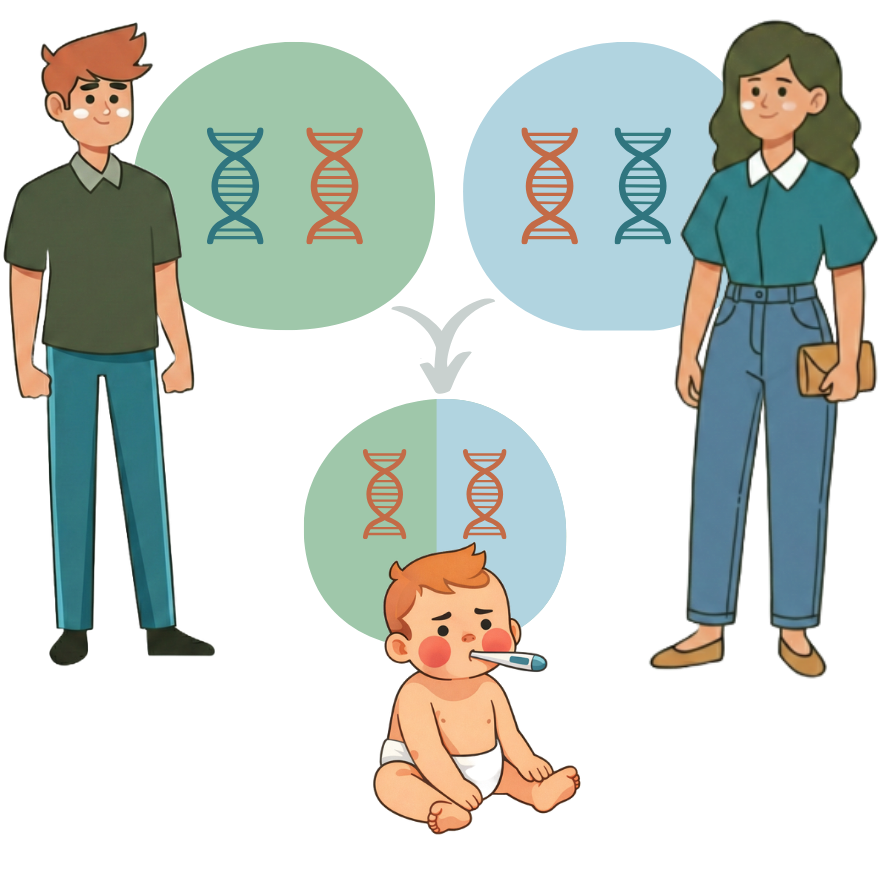
It is often surprising to prospective parents, but most babies born with specific types of genetic conditions have healthy parents with no obvious family history of the disease. Many people are carriers of genetic mutations without knowing it. Genetic mutations can cause a gene to be defective. Because we have two copies of most genes (one from each parent), a healthy copy usually compensates for the defective one. However, if both parents happen to be carriers for the same recessive disease, there is a 25% risk that their child will inherit both defective copies and will be affected.
Large-scale studies have established how common these inherited genetic conditions are in the general population. In a U.S. study involving hundreds of thousands of individuals, the estimated rate of affected pregnancies was approximately 1 in 175 [1]. Similarly, in a recent nationwide Australian screening program including over ten thousand couples, around 1 in 50 couples were identified as being at increased risk of having an affected child [2].
- Westemeyer M, Saucier J, Wallace J, et al. Clinical experience with carrier screening in a general population: support for a comprehensive pan-ethnic approach. Genetics in Medicine. 2020;22:1320–1328. doi:10.1038/s41436-020-0807-4
- Mackenzie's Mission Investigators. Nationwide implementation of reproductive genetic carrier screening in Australia. New England Journal of Medicine. 2024. doi:10.1056/NEJMoa2314768
The test
Expanded carrier screening is a DNA-based test that analyzes a person's genetic material to determine whether they are a carrier of certain inherited conditions. Using next-generation sequencing technology, this type of screening can simultaneously examine hundreds or even thousands of genes. The test specifically profiles 1,944 genes associated with severe diseases that typically affect children early in life. The process is simple and non-invasive, relying on a saliva sample, which contains DNA that can be extracted and sequenced. The test focuses on recessive and X-linked conditions—these are genetic disorders that usually do not cause symptoms in parents but can lead to serious illness in their children if both parents carry the same condition or if specific inheritance patterns are involved.
The lab
We work with CeGaT GmbH as our partner laboratory for expanded carrier screening. CeGaT performs the genetic analysis using a dedicated assay they have developed, enabling detection of both single nucleotide and copy number variants, as well as targeted testing for conditions such as fragile X syndrome and spinal muscular atrophy. The laboratory holds the key international accreditations for clinical genetic testing, including CAP, CLIA, and ISO 15189.

Genetic counselling
A key part of our service is pre- and post-test genetic counselling with a specialist. These sessions provide an opportunity to ask questions, understand the scope and limitations of the test, and discuss the results in detail. By reviewing personal and family history, the counselling helps put findings into context and supports informed decision-making.
How it works
Test your carrier status from the comfort of your home.
Genetic counselling
Speak with a certified genetic counsellor online to understand what carrier screening means for you and your family.
Take a sample
Collect a simple saliva sample at home using the kit we send you. No clinic visit needed — just seal and return with the prepaid label.
Discuss results
Review your results with your doctor or our genetic counsellor, who will help you understand what the findings mean for your plans.
Gene list
Neurology 423 genes+
Muscular dystrophies, congenital myopathies, congenital myasthenic syndromes, hereditary motor and sensory neuropathies, epileptic encephalopathies, leukodystrophies, neuronal ceroid lipofuscinoses, hereditary ataxias, hereditary spastic paraplegias, brain malformations, peroxisomal disorders, neurodegeneration with brain iron accumulation, and other neuromuscular and neurodegenerative conditions
AAAS, AARS1, ABCD1, ABHD12, ACOX1, ACP5, ADAR, ADCY5, ADCY6, ADGRG1, ADGRG6, ADPRS, AFG3L2, AGTPBP1, AIMP1, ALDH3A2, ALDH5A1, ALG13, ALS2, AMPD2, ANO5, AP1S2, AP3B2, AP4M1, AP4S1, APC2, APTX, ARFGEF2, ARL6IP1, ARMC9, ARSA, ARV1, ARX, ASCC1, ASPA, ASPM, ATCAY, ATP13A2, ATP1A2, ATP2B3, ATP7B, AVIL, B3GALNT2, B4GALNT1, B4GAT1, BCAP31, BLTP1, BRF1, BSCL2, C19orf12, CA8, CAPN3, CASK, CCT5, CENPF, CEP41, CERS1, CHAT, CHMP1A, CHRNA1, CHRNB1, CHRND, CHRNE, CHRNG, CLCN1, CLCN2, CLP1, CNPY3, CNTNAP1, COASY, COL13A1, COL6A1, COL6A2, COL6A3, COLQ, COQ4, COQ8A, COX10, CPLANE1, CRB2, CRPPA, CRYAB, CSF1R, CSTB, CTDP1, CTNNA2, CWF19L1, CYP27A1, CYP2U1, CYP7B1, D2HGDH, DAG1, DARS1, DARS2, DCAF17, DCX, DDC, DDHD1, DDHD2, DDX59, DENND5A, DGUOK, DHDDS, DLAT, DMD, DMXL2, DNAJC19, DNAJC3, DNAJC6, DOK7, DPYD, DST, DYSF, ECEL1, EGR2, EIF2B1, EIF2B2, EIF2B3, EIF2B4, EIF2B5, EIF2S3, ELOVL4, ELP1, EML1, ENTPD1, EPM2A, ERCC6, ERCC8, ERLIN1, ERLIN2, ETFDH, EXOC3L2, EXOSC3, EXOSC8, EXOSC9, FA2H, FAM149B1, FBXO7, FGD4, FHL1, FIG4, FKRP, FKTN, FLVCR1, FLVCR2, FOLR1, FRRS1L, FTL, FUCA1, FXN, GALC, GBA2, GBE1, GCH1, GJC2, GMPPB, GOLGA2, GOSR2, GOT2, GPAA1, GPSM2, GPT2, GRID2, GRIN1, GRM1, GRM7, GUCY1A1, GUF1, HACD1, HACE1, HADHA, HADHB, HARS1, HEPACAM, HEXA, HEXB, HIKESHI, HINT1, HPDL, HSD17B10, HSPD1, HYCC1, HYLS1, IFIH1, IGHMBP2, INPP5K, ITGA7, ITPR1, JAM2, JAM3, KCNJ10, KCNMA1, KDM5C, KIDINS220, KIF1A, KIF1C, KIFBP, KLHL40, KLHL41, KY, L2HGDH, LAMA2, LAMB1, LAMC3, LARGE1, LIMS2, LMOD3, LPIN1, LYST, MAG, MBOAT7, MECP2, MECR, MLC1, MMACHC, MPZ, MRE11, MSTO1, MTFMT, MTM1, MTMR2, MTTP, MUSK, MYBPC1, MYH3, MYMK, NARS1, NAXE, NCAPD3, NDE1, NDRG1, NDUFA12, NDUFA2, NDUFS4, NDUFS7, NDUFS8, NDUFV1, NEB, NFASC, NGF, NHLRC1, NKX6-2, NRROS, NRXN1, NT5C2, NTRK1, NUP188, OCLN, OPA3, OPHN1, ORAI1, OSGEP, PANK2, PCCA, PCCB, PCDH12, PCYT2, PDE10A, PDHA1, PEX1, PEX10, PEX12, PEX13, PEX16, PEX2, PEX26, PEX3, PEX5, PEX6, PEX7, PI4KA, PIEZO2, PIP5K1C, PLA2G6, PLCB1, PLEC, PLEKHG5, PLP1, PMP22, PNKP, PNPLA6, PNPT1, POLG, POLR3A, POLR3B, POMGNT1, POMGNT2, POMK, POMT1, POMT2, PRDM12, PRICKLE1, PRKRA, PRPS1, PRX, PTPN23, PTRH2, PTS, PYCR2, PYROXD1, QDPR, RAB39B, RAD21, RAPSN, RARS1, RELN, RETREG1, RNASEH2A, RNASEH2B, RNASEH2C, RNASET2, ROBO3, RRM2B, RTTN, RXYLT1, RYR1, SACS, SAMHD1, SBF1, SBF2, SCARB2, SCN1B, SCN4A, SCN9A, SCO2, SELENON, SEPSECS, SETX, SGCA, SGCB, SH3TC2, SIL1, SLC12A6, SLC16A2, SLC18A3, SLC1A4, SLC25A12, SLC25A4, SLC2A1, SLC30A10, SLC39A14, SLC52A2, SLC52A3, SLC5A7, SLC6A3, SLC6A5, SLC6A8, SLC9A1, SLC9A6, SMPD4, SNORD118, SNX14, SOD1, SPART, SPG11, SPR, SPTBN2, SPTBN4, SQSTM1, STAC3, STAMBP, STIM1, STRADA, STUB1, SUCLA2, SUOX, SURF1, SVBP, SYN1, SYNE1, SYNJ1, SZT2, TANGO2, TBC1D24, TDP2, TECPR2, TH, TIMM8A, TMX2, TNNT1, TOE1, TPM3, TRAK1, TRAPPC11, TRAPPC12, TREX1, TRIM2, TRIM32, TRIP4, TSEN2, TSEN54, TTC19, TTN, TTPA, TYMP, UBA1, UBA5, UCHL1, UFC1, UGP2, UNC80, USP18, VAC14, VAMP1, VLDLR, VMA21, VPS11, VPS13D, VPS37A, VPS41, VPS53, VRK1, WARS2, WASHC5, WDR45, WDR45B, WDR62, WDR73, WDR81, WNK1, WWOX, ZC4H2, ZFYVE26
Metabolic 286 genes+
Inborn errors of metabolism including amino acid disorders, organic acidemias, fatty acid oxidation disorders, urea cycle disorders, glycogen storage diseases, lysosomal storage disorders, peroxisomal disorders, congenital disorders of glycosylation, cholesterol biosynthesis defects, mineral and metal metabolism disorders, and other metabolic conditions
ABCD4, ACADM, ACADS, ACADSB, ACADVL, ACAT1, ACOX2, ACY1, ADSL, AGA, AGL, AGPS, AGXT, ALAD, ALDH18A1, ALDH4A1, ALDH6A1, ALDH7A1, ALDOA, ALDOB, ALG1, ALG11, ALG12, ALG14, ALG3, ALG6, ALG8, AMACR, AMPD1, AMT, ANO10, ARG1, ARSB, ARSL, ASAH1, ASL, ASS1, ATIC, ATP6AP1, ATP6V0A2, ATP7A, ATPAF2, AUH, B3GALT6, B3GAT3, B4GALT1, B4GALT7, BCKDHA, BCKDHB, BCKDK, CA5A, CARS2, CBS, CHST14, CHST3, CHSY1, CLDN16, CLDN19, CLN3, CLN5, CLN6, CLN8, CLPP, CNNM2, COG1, COG2, COG4, COG5, COG6, COG7, COQ7, COX14, CPS1, CPT1A, CPT2, CTNS, CTSA, CTSD, CTSK, DHCR24, DHCR7, DHODH, DHTKD1, DNAJC12, DNM1L, DOLK, DPAGT1, DPM1, DPM2, DYM, EBP, EPG5, ERAL1, ETFA, ETFB, FAR1, FASTKD2, FBP1, FCSK, FITM2, FTCD, FUT8, G6PC1, G6PC3, GAA, GALK1, GALNS, GAMT, GBA1, GCDH, GDAP1, GFER, GFM1, GFM2, GFPT1, GK, GLB1, GLDC, GLS, GLYCTK, GM2A, GMPPA, GNPAT, GNPTAB, GNPTG, GNS, GPHN, GRHPR, GTPBP3, GUSB, GYS1, GYS2, HADH, HARS2, HCFC1, HGSNAT, HJV, HLCS, HMGCL, HMGCS2, HOGA1, HPRT1, HSD11B2, HSD17B4, HTRA2, HYAL1, IARS2, IDS, IDUA, ITPA, IVD, KCTD7, LARS2, LDHA, LDLR, LFNG, LIPA, LMBRD1, LPL, LYRM4, MAGT1, MAN1B1, MAN2B1, MANBA, MAOA, MAT1A, MCCC1, MCCC2, MCEE, MCOLN1, MFSD8, MGAT2, MLYCD, MMAA, MMAB, MMADHC, MMUT, MOCS1, MOCS2, MOGS, MPDU1, MPI, MRPL3, MRPS16, MSMO1, MTHFR, NAGA, NAGLU, NAGS, NDUFA10, NDUFAF1, NDUFAF4, NDUFS6, NEU1, NGLY1, NNT, NPC1, NPC2, NSDHL, NUBPL, OGDH, OTC, OXCT1, PAH, PARS2, PC, PCK1, PEPD, PEX11B, PEX14, PEX19, PFKM, PGAP2, PGAP3, PGK1, PGM1, PGM3, PHGDH, PHKG2, PHYH, PIGA, PIGL, PIGN, PIGO, PIGS, PIGT, PIGV, PMM2, PNPO, POR, PPT1, PRODH, PSAP, PSAT1, PYCR1, PYGL, PYGM, RBCK1, RFT1, RMND1, SAR1B, SC5D, SEC23B, SGSH, SLC12A3, SLC16A1, SLC17A5, SLC22A5, SLC25A13, SLC25A15, SLC25A20, SLC25A22, SLC25A42, SLC2A2, SLC35A1, SLC35A2, SLC35C1, SLC35D1, SLC37A4, SLC39A8, SLC3A1, SLC46A1, SLC5A1, SLC7A7, SMPD1, SSR4, ST3GAL3, STT3A, SUCLG1, SUMF1, TACO1, TMEM165, TMEM70, TPP1, TRMT10C, TRPM6, TUFM, TUSC3, UMPS, UQCRB, UROS, VMA12, VMA22, VPS33A, XYLT1, XYLT2
Developmental 179 genes+
Syndromic and non-syndromic intellectual disability, global developmental delay, autism spectrum-associated syndromes, brain malformations, GPI anchor deficiency syndromes, DNA repair and chromosome maintenance disorders, and other neurodevelopmental conditions
ABCC9, ACACA, ACO2, ACSL4, ACTL6B, ADAM22, ADARB1, AFF2, AHCY, AIMP2, ALG9, AP4B1, AP4E1, ARHGEF9, ATAD1, ATG7, ATP6AP2, ATP8A2, ATRX, B9D1, BRWD3, CAD, CAMK2A, CC2D1A, CCDC22, CCDC88A, CCDC88C, CDH11, CEP55, CHKB, CIT, CKAP2L, CNKSR2, CNTNAP2, CPLX1, CRADD, CRBN, CTU2, CYB5R3, DBT, DCHS1, DDX11, DDX3X, DEAF1, DEGS1, DHX37, DLG3, DOCK7, EIF4A3, EMC1, EMC10, EPRS1, ERCC1, EXT2, EXTL3, FOXL2, FOXRED1, GAD1, GAN, GATM, GCSH, GDI1, GEMIN4, GLUL, GRIA3, GRIK2, HERC2, HOXA1, HPD, HUWE1, IARS1, IGF1, IL1RAPL1, INTS1, IQSEC2, KATNIP, KDM5B, KIF14, KLHL7, KNL1, KPTN, L1CAM, LAMA1, LAS1L, MED12, MED17, MED25, METTL5, MFSD2A, MRPS34, MSL3, MTR, NADSYN1, NALCN, NDST1, NECAP1, NEMF, NEXMIF, NKAP, NONO, NSUN2, NUDT2, OTUD5, OTUD6B, OXR1, PAM16, PCDH19, PHF6, PIGB, PIGG, PIGK, PIGP, PIGQ, PLAA, PLEKHG2, PLVAP, PNPLA8, POLA1, POLR1C, PPP1R21, PQBP1, PRUNE1, PTCHD1, PUS7, QARS1, RALGAPA1, RDH11, RINT1, RLIM, RNF113A, RNF13, RPIA, RPS6KA3, RTN4IP1, RUSC2, SCAPER, SCYL1, SDHAF1, SLC12A5, SLC13A5, SLC25A1, SLC5A6, SLC6A9, ST3GAL5, STIL, TAF1, TAF2, TAF6, TASP1, TBC1D23, TBCD, TCTN3, TELO2, THOC6, TIMM50, TMEM132E, TMEM260, TMEM94, TMTC3, TRAIP, TRAPPC4, TRAPPC9, TRIT1, TRMT1, TUBGCP2, TUBGCP6, UBE2A, UFM1, UGDH, UROC1, WDR4, WNT1, XRCC4, YIF1B, ZBTB24, ZC3H14, ZDHHC9, ZNF335, ZNF711
Fetal (including NIPD) 125 genes+
Conditions presenting in utero or at birth, including lethal skeletal dysplasias, fetal akinesia and arthrogryposis syndromes, hydrops fetalis, primary microcephaly, spondylocostal dysostosis, and other severe congenital conditions with prenatal onset
ADAMTSL2, ADAT3, AFG2A, AGRN, ALG2, ALX3, ANKLE2, ANTXR1, ANTXR2, ASNS, ATR, BBIP1, BIN1, BMPER, BRAT1, C1QBP, CDK10, CDK5RAP2, CDKL5, CEP135, CEP152, CEP63, CFAP418, CFL2, CHUK, CLCN4, CLCN7, COLEC10, CRLF1, CWC27, DDR2, DLL3, DNMT3B, DONSON, DPH1, DSE, EFL1, EMG1, ERBB3, FAM20A, FAT4, FTO, GLDN, GLE1, GPC6, GPX4, GZF1, HES7, HNRNPH2, HSPG2, IFT56, INPPL1, INTU, IRX5, KATNB1, LAGE3, LAMB2, LARP7, LGI4, LIFR, LNPK, LTBP4, MAP3K20, MATN3, MCPH1, MEGF10, MEOX1, MESP2, MGP, MID1, MMP13, MRPS14, MYO18B, MYO9A, MYOD1, NAA10, NANS, NHEJ1, NKX3-2, NPHS1, NUP88, PAK3, PAPSS2, PDE6D, PGAP1, PHF8, PKD1L1, PLCB4, PLG, PLPBP, POP1, PRG4, PRRX1, PSPH, RAB33B, RAD50, RAX, RBM10, ROGDI, RSPO2, SASS6, SCYL2, SLC26A3, SLC33A1, SLC35A3, SMS, SOST, SPINT2, STAG2, TBCK, TBX15, TCTN2, THOC2, TP53RK, TPRKB, TRIP11, TSEN15, TUBGCP4, TXN2, TXNL4A, UBE3B, UBR1, UNC13D, VPS51, ZNHIT3
Mitochondrial 114 genes+
Mitochondrial respiratory chain deficiencies, mitochondrial DNA depletion and deletion syndromes, coenzyme Q10 deficiency, pyruvate metabolism disorders, mitochondrial translation defects, and other mitochondrial energy metabolism disorders
AARS2, ABAT, ACAD9, AGK, ATAD3A, ATP5F1D, ATP5MK, BCS1L, BOLA3, BTD, C2orf69, CLPB, COA6, COA8, COQ2, COQ6, COQ8B, COQ9, COX15, COX20, COX6A2, COX6B1, COX7B, COX8A, CYC1, DLD, DNA2, DNM2, EARS2, ECHS1, ELAC2, ETHE1, FARS2, FBXL4, FLAD1, GLRX5, HCCS, HIBCH, HSPA9, IBA57, ISCA1, ISCA2, KARS1, LIAS, LIPT1, LONP1, LRPPRC, LYRM7, MDH2, MFN2, MGME1, MICOS13, MICU1, MIPEP, MPV17, MRPS2, MRPS22, MTO1, MTRFR, NARS2, NDUFA1, NDUFA11, NDUFA13, NDUFA6, NDUFA9, NDUFAF2, NDUFAF3, NDUFAF5, NDUFAF6, NDUFAF8, NDUFB3, NDUFB8, NDUFS1, NDUFS2, NDUFS3, NDUFV2, NFU1, OPA1, PDHB, PDHX, PDP1, PDSS1, PDSS2, PET100, PMPCA, PMPCB, POLG2, RARS2, SARS2, SCO1, SERAC1, SFXN4, SLC19A2, SLC19A3, SLC25A19, SLC25A26, SLC25A3, SLC25A46, TARS2, TIMMDC1, TK2, TMEM126B, TPK1, TRMT5, TRMU, TRNT1, TSFM, TWNK, UQCC2, UQCRC2, UQCRFS1, VARS1, VARS2, YARS2
Musculoskeletal 113 genes+
Osteogenesis imperfecta, skeletal dysplasias, craniosynostosis syndromes, osteopetrosis, Ehlers-Danlos syndromes, limb malformation disorders, short-rib thoracic dysplasias, and other bone and connective tissue disorders
ADAMTS2, ALPL, ALX4, AMER1, ATP6V1A, BBS10, BHLHA9, BMP1, BMP2, BMPR1B, BPNT2, C2CD3, CA2, CCN6, CCNQ, CDC45, CEP120, CFAP410, CILK1, COL11A2, COL1A2, COL27A1, COLEC11, CREB3L1, CRTAP, DLX5, DOCK6, DYNC2H1, DYNC2I1, DYNC2I2, DYNC2LI1, EFNB1, EOGT, ESCO2, EVC2, FAM20C, FGD1, FGFR3, FKBP10, FLNB, GDF5, GORAB, GPC3, HDAC8, IFT122, IFT140, IFT172, IFT80, IFT81, IHH, IL11RA, KDELR2, KIF7, LBR, LMBR1, LRP4, LRP5, LTBP3, MASP1, MEGF8, MESD, MKS1, MMP2, NBAS, NEK1, OSTM1, P3H1, PAX3, PHEX, PISD, PLOD2, PLS3, POLR1D, PPIB, PRMT7, PTH1R, RAB23, RIN2, RNU4ATAC, ROR2, RSPRY1, SCARF2, SEC23A, SEC24D, SERPINF1, SERPINH1, SHOX, SLC10A7, SLC26A2, SLC39A13, SMC1A, SNX10, SP7, SPARC, TAPT1, TBX22, TBX4, TCF12, TCIRG1, TENT5A, TGDS, TGFB1, TMCO1, TMEM38B, TNFRSF11A, TNFRSF11B, TNFSF11, TRAPPC2, TRPV6, USP9X, WDR35, WNT10B, WNT7A
Endocrinology 105 genes+
Congenital adrenal hyperplasia, disorders of sex development, congenital hypothyroidism, hypogonadotropic hypogonadism, congenital hyperinsulinism, neonatal and monogenic diabetes, growth hormone deficiency, lipodystrophies, autoimmune polyendocrinopathy, and other endocrine disorders
ABCC8, ACAN, AGPAT2, AIRE, ALMS1, ANOS1, AQP2, AR, ARNT2, CACNA1D, CASR, CAV1, CAVIN1, CCDC8, CDT1, CEP57, CISD2, CPAP, CRIPT, CUL4B, CUL7, CYP11A1, CYP11B1, CYP11B2, CYP17A1, CYP27B1, CYP2R1, DHH, DMP1, DUOX2, DUOXA2, EIF2AK3, FANCM, FEZF1, FOXE1, FOXP3, FSHB, GCK, GHR, GLIS3, GNRH1, GNRHR, HAMP, HESX1, HSD17B3, HSD3B2, IER3IP1, IGF1R, IGSF1, INS, INSR, KCNJ11, KDM6A, KISS1R, LHB, LHX3, LRBA, MAMLD1, MC2R, NEUROG3, NPR2, NR0B1, NSMCE2, OBSL1, ORC1, ORC4, ORC6, PCBD1, PCNT, PCSK1, PCYT1A, PIK3R1, PLK4, POC1A, POMC, POU1F1, PPP1R15B, PROP1, PTF1A, RBBP8, RFX6, RPL10, SAMD9, SGPL1, SLC29A3, SLC34A1, SLC34A3, SLC5A5, SOX3, SRD5A2, STAR, STAT5B, TAC3, TACR3, TBCE, TBX19, TFR2, TOP3A, TRIM37, TRMT10A, TSHB, TSHR, VDR, WFS1, ZMPSTE24
Ophthalmology 85 genes+
Retinal dystrophies, Bardet-Biedl syndrome, Joubert syndrome with retinal involvement, congenital cataracts, microphthalmos and anophthalmos, oculocutaneous albinism, congenital glaucoma, and other hereditary eye disorders
ABCA4, ALDH1A3, ANK3, ARL13B, ARL3, ARL6, ASPH, B3GLCT, BBS1, BBS12, BBS2, BBS4, BBS5, BBS7, BBS9, BCOR, C12orf57, CC2D2A, CEP290, CEP78, CHM, CHRDL1, CLRN1, COL11A1, COL18A1, COL9A2, CRB1, CRYAA, CSPP1, FOXE3, FRAS1, FREM2, GDF6, HMX1, IGBP1, INPP5E, KIAA0586, LRP2, LTBP2, LZTFL1, MAB21L2, MFRP, MITF, MKKS, MPDZ, NDP, NHS, OFD1, PDE6G, PITX3, PLOD3, POC1B, PRDM5, PRSS56, PXDN, RAB18, RAB3GAP1, RAB3GAP2, RARB, RIC1, RIMS2, RIPK4, RPE65, RPGRIP1, RPGRIP1L, SDCCAG8, SH3PXD2B, SLC4A4, SMOC1, SRD5A3, STRA6, TBC1D20, TENM3, TMEM126A, TMEM216, TMEM231, TMEM237, TMEM67, TRAF3IP1, TTC8, TYR, TYRP1, USH1G, VPS13B, VSX2
Dermatology 67 genes+
Epidermolysis bullosa, ichthyoses, ectodermal dysplasias, palmoplantar keratodermas, hereditary hair and nail disorders, pigmentation disorders, and other genodermatoses
ABCA12, ABHD5, ALOX12B, ALOXE3, AP1S1, CARD11, CDH3, CDSN, CERS3, COL17A1, COL7A1, CSTA, CYP4F22, DSG1, DSP, EDA, EDAR, EDARADD, EDN3, EDNRB, ENPP1, EXPH5, GJA1, GJB2, GJB3, GJB6, GRHL2, GTF2H5, HOXC13, HPGD, ITGA3, ITGA6, ITGB4, JUP, KRT10, KRT14, KRT5, LAMA3, LAMB3, LAMC2, MBTPS2, MPLKIP, MYO5A, NECTIN1, NECTIN4, NEK9, NIPAL4, PNPLA1, POMP, PORCN, RAB27A, RMRP, RSPO4, SLC27A4, SLC39A4, SMARCAL1, SNAP29, SPINK5, ST14, STS, TAT, TGM1, TSPEAR, TWIST2, USB1, UVSSA, WNT10A
Hearing 57 genes+
Non-syndromic sensorineural hearing loss, Usher syndrome, Pendred syndrome, auditory neuropathy, and other hereditary hearing disorders
ADCY1, ADGRV1, CABP2, CDC14A, CDH23, CIB2, CLDN14, CLIC5, COCH, ELMOD3, EPS8, EPS8L2, ESPN, ESRRB, FGF3, GIPC3, GRXCR1, HGF, ILDR1, LHFPL5, LOXHD1, LRTOMT, MARVELD2, MPZL2, MSRB3, MYO15A, MYO3A, MYO6, MYO7A, OTOA, OTOF, OTOG, OTOGL, PCDH15, PDZD7, PJVK, POU3F4, PPIP5K2, PTPRQ, RDX, RIPOR2, ROR1, S1PR2, SERPINB6, SLC26A4, SLC26A5, SYNE4, TECTA, TMC1, TMIE, TMPRSS3, TPRN, TRIOBP, USH1C, USH2A, WBP2, WHRN
Immunology 57 genes+
Severe combined immunodeficiency (SCID), agammaglobulinemias, MHC class II deficiency, chronic granulomatous disease, Mendelian susceptibility to mycobacterial disease, hemophagocytic lymphohistiocytosis, autoinflammatory syndromes, and other primary immunodeficiencies
ADA, BLNK, BTK, CARMIL2, CD19, CD247, CD27, CD3D, CD3E, CD40, CD70, CD79A, CD79B, CFP, CIITA, CORO1A, CTPS1, DOCK2, FADD, IFNGR1, IFNGR2, IKBKB, IL12RB1, IL1RN, IL21R, IL2RB, IL7R, IRAK4, IRF8, ITCH, JAK3, LAT, MALT1, MCM4, MSN, MTHFD1, MYD88, NCF4, NCKAP1L, NSMCE3, PNP, PRKCD, PRKDC, PSMB8, PTPRC, RAC2, RFX5, RFXANK, RFXAP, RIPK1, RNF168, SP110, STAT2, STX11, TAP1, TYK2, ZAP70
Cancer 55 genes+
Fanconi anemia, xeroderma pigmentosum, dyskeratosis congenita and telomere biology disorders, hereditary breast and ovarian cancer, DNA repair deficiency syndromes, hereditary tumor predisposition syndromes, and other cancer-predisposing conditions
ACD, ATM, BLM, BRCA1, BRCA2, BUB1B, CTC1, DDB2, DIS3L2, DKC1, DOCK8, EPCAM, ERCC2, ERCC3, ERCC4, ERCC5, FANCA, FANCB, FANCC, FANCD2, FANCE, FANCF, FANCG, FANCI, FANCL, FH, HAX1, ITK, LIG4, MET, MUTYH, NBN, NHP2, NOP10, PARN, POLE, PRF1, RAD51C, RECQL4, RTEL1, SDHA, SDHD, SH2D1A, SLX4, SMAD4, STN1, SUFU, TERT, TRIP13, UBE2T, WRAP53, WRN, XPA, XPC, XRCC2
Haematology 51 genes+
Hemoglobinopathies, hereditary hemolytic anemias, congenital bleeding and coagulation disorders, bone marrow failure syndromes, congenital neutropenia, platelet disorders, thrombotic microangiopathies, and other hematological conditions
ABCB7, ADA2, ADAMTS13, AK2, AMN, AP3B1, AP3D1, ARPC1B, CDIN1, CSF3R, DIAPH1, DNAJC21, ERCC6L2, F10, F13A1, F2, F7, F8, F9, FERMT3, FGA, FGB, FGG, GATA1, GSS, HBB, HK1, JAGN1, LPIN2, MPL, MTRR, MYSM1, NT5C3A, PERCC1, PIEZO1, PKLR, PRDX1, PROC, PROS1, PUS1, RBM8A, SBDS, SLC25A38, SLC4A1, TBXAS1, TCN2, TF, TMPRSS6, TPI1, VPS45, WAS
Gastrohepatology 50 genes+
Cystic fibrosis, progressive familial intrahepatic cholestasis, bile acid synthesis defects, congenital diarrheal disorders, very early onset inflammatory bowel disease, hereditary liver diseases, and other gastrointestinal and hepatic conditions
ABCB11, ABCB4, ADAM17, ADK, AKR1D1, ATP8B1, CD3G, CD40LG, CD55, CFTR, CLDN1, CLMP, CYBA, CYBB, DCDC2, DCLRE1C, DGAT1, FAH, FLNA, GALE, GALT, GUCY2C, HPS1, HSD3B7, ICOS, IL10RA, IL2RA, IL2RG, KRT8, MVK, MYO5B, NCF1, NCF2, NR1H4, OTULIN, RAG1, RAG2, SGO1, SKIC2, SKIC3, SLC9A3, STAT1, STXBP2, TALDO1, TJP2, TTC7A, UGT1A1, USP53, WNT2B, XIAP
Renal 46 genes+
Hereditary nephritis, polycystic kidney disease, nephrotic syndromes, nephronophthisis, renal tubular disorders, congenital anomalies of the kidney and urinary tract, and other hereditary renal conditions
ACE, AGT, AGTR1, AHI1, ANKS6, ARHGDIA, ATP6V0A4, ATP6V1B1, BSND, CEP164, CEP83, CLCN5, CLCNKB, CLDN10, COL4A3, COL4A4, COL4A5, CYP24A1, DGKE, DSTYK, FREM1, GRIP1, HPSE2, INVS, ITGA8, KCNJ1, MAGI2, MAPKBP1, NPHP1, NPHP3, NPHP4, NPHS2, NUP107, NUP133, NUP93, OCRL, PKHD1, PLCE1, REN, SCNN1B, SCNN1G, SLC12A1, TBC1D8B, TTC21B, VIPAS39, VPS33B
Cardiology 42 genes+
Hypertrophic and dilated cardiomyopathies, arrhythmogenic cardiomyopathy, inherited arrhythmia syndromes, hereditary aortopathies, congenital heart defects with laterality disorders, and other inherited cardiovascular conditions
ABCC6, ACTA1, ADAMTS19, AIFM1, BGN, CASQ2, CCBE1, CDH2, COL3A1, EFEMP2, EMD, FBLN5, FKBP14, GDF1, GLA, GNB5, IPO8, KCNE1, KCNQ1, LAMP2, LMNA, LZTR1, MMP21, MRPL44, MYBPC3, MYH11, MYH7, MYL3, MYPN, NAXD, NODAL, PLOD1, PPA2, PTPN14, SGCD, SGCG, SLC2A10, SPEG, TAFAZZIN, TCAP, TRDN, TSPYL1
Ciliopathies 25 genes+
Primary ciliary dyskinesia, Meckel syndrome, short-rib polydactyly syndromes, cranioectodermal dysplasia, mucociliary clearance disorders, and other ciliopathy-related conditions
B9D2, CCNO, CEP104, DNAH5, DRC1, DRC2, DRC4, EVC, IFT27, IFT43, IFT52, IFT74, IQCB1, KIAA0753, NEK8, PIBF1, PIK3CD, RSPH1, RSPH3, SCNN1A, TMEM107, TMEM138, TXNDC15, WDPCP, WDR19
Respiratory 21 genes+
Primary ciliary dyskinesia with respiratory manifestations, surfactant metabolism dysfunction, hereditary pulmonary alveolar proteinosis, heritable pulmonary arterial hypertension, and other respiratory conditions
ABCA3, CCDC39, CCDC40, CFAP298, CFAP300, CSF2RB, DNAAF11, DNAAF19, DNAAF3, DNAAF4, DNAAF5, DNAAF6, DNAH11, DNAH9, EIF2AK4, LRRC56, MARS1, ODAD1, ODAD2, SFTPB, SPAG1
Other 39 genes+
Miscellaneous rare monogenic disorders not fitting a single organ-system category, including isolated congenital conditions, ultra-rare syndromes, and other genetic conditions
AIPL1, AP1B1, ATOH7, ATP6V1E1, BANF1, CANT1, CCDC47, ELMO2, ELP2, FOXN1, FRMPD4, FTSJ1, HERC1, IGFBP7, IQSEC1, KLHL15, KRT18, LINS1, MED23, METTL23, MLPH, NMNAT1, NTNG2, NUP62, NYX, PIGY, PREPL, PRSS12, SELENOI, SYP, TAF13, TNFRSF13B, TSPAN7, TTI2, UPF3B, UQCRQ, WNT3, WNT4, ZIC3
Frequently asked questions
What is carrier screening?+
Carrier screening is a genetic test that identifies whether you carry a gene variant associated with certain inherited conditions. Carriers are typically healthy and have no symptoms. In most cases, it is impossible to know what you are a carrier for without testing.
When two partners are each carriers for the same condition, there is generally a 25% chance with each pregnancy of having a child affected by that condition. Carrier screening gives couples this information before or during pregnancy so they can make informed, empowered decisions.
How much does it cost?+
The genetic test costs 1,495 CHF per couple (747.50 CHF per person) and is paid out of pocket. Genetic counselling sessions cost 200–300 CHF per couple and are covered by regular health insurance.
What can I do with my results?+
If both partners are identified as carriers for the same condition, your genetic counsellor will explain the full range of options available to you. These may include:
- Preimplantation genetic testing (PGT) — genetic testing of embryos created through IVF before a pregnancy is established
- Prenatal testing during pregnancy — such as chorionic villus sampling (CVS) or amniocentesis to test the pregnancy directly
- Proceeding with this information — some couples choose to continue a pregnancy with a full understanding of the possible outcomes
- Donor conception or adoption — options that some carrier couples explore
There is no single "right" answer, and our team is here to support whatever path feels right for you. Schedule a consultation to discuss your specific situation.
Medical content on deena.health is reviewed by Dr. Isis Atallah, FMH Medizinische Genetik. Last reviewed: .